
The medical industry has benefited significantly from advances in polymeric materials and associated processing technologies, which now play a central role in the development of lighter, safer, more functional and cost-effective medical devices.
However, despite their potential, the PHAs currently available still have limitations in terms of mechanical properties, processability and cost – factors that hinder their large-scale adoption.
In addition to regulatory and performance requirements, the sector currently faces growing challenges relating to sustainability, reducing its environmental footprint and integrating increasingly compact and intelligent technological solutions. Against this backdrop, plastics play a strategic role in simultaneously addressing clinical, industrial and environmental challenges. It is against this backdrop that PIEP has undertaken various R&D projects in collaboration with national and international industrial and scientific partners, exploring different aspects of the application of polymeric materials and advanced manufacturing technologies in the healthcare sector. Together, these projects demonstrate how polymer engineering can contribute to more efficient, personalised and sustainable medical devices throughout their entire life cycle.
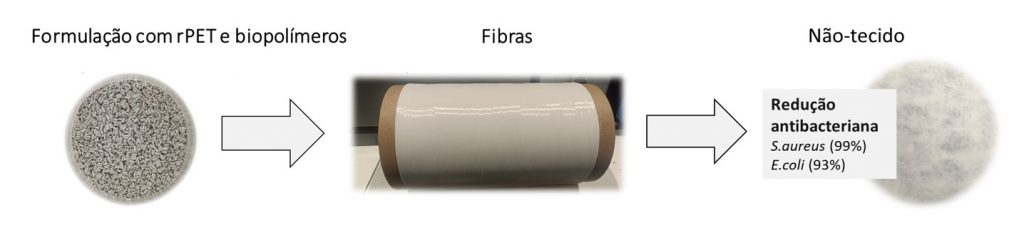
One of the most significant aspects of this transformation relates to the development of new materials and sustainable solutions for medical and technical textile applications. In this field, the RECPET project is of particular note. RECPET is a jointly funded project (TrimNW, PIEP, CITEVE and Ecoibéria) focused on the development of sustainable, antimicrobial nonwovens for medical applications, notably surgical gowns and other personal protective equipment. The main objective is to utilise post-consumer recycled PET (rPET), sourced from a variety of streams beyond traditional water bottles, as well as from production waste, transforming it into advanced solutions through formulation and extrusion processing. By incorporating circular economy principles, the project aims to reduce the environmental impact associated with conventional textile materials, without compromising the technical requirements demanded by the healthcare sector, such as comfort, durability and hygiene. PIEP plays a central role in the technical development of the project, working on everything from the selection and characterisation of raw materials to the development of functionalised formulations at a pre-industrial scale that ensure the non-wovens possess comfort and antimicrobial properties.
In addition, PIEP is responsible for the thermal and rheological characterisation of the materials developed, ensuring that they can be processed into fibres and, subsequently, into non-woven fabrics for medical applications. This integrated approach enhances the capacity to recover polymeric waste for high-value-added applications, contributing to the medical sector’s transition towards more circular and sustainable models.
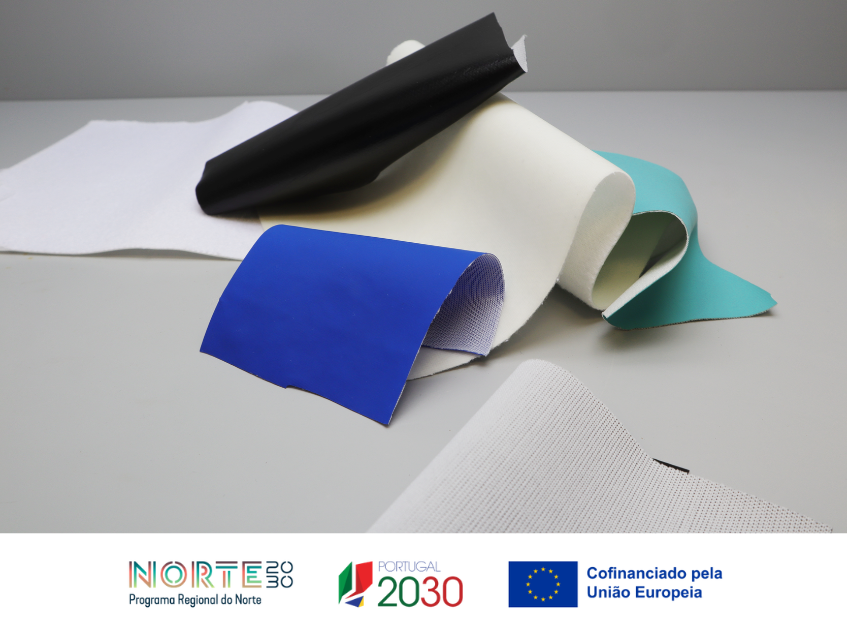
Also in the field of advanced materials applied to flexible substrates, the MANTEL (Multifunctional sustAiNable TExtile Laminates) project is exploring new polymer coating solutions with potential for demanding technical applications, including the healthcare sector. The project centres on the development of innovative functional polymer coating solutions for textile substrates, with a particular focus on biopolymers and elastomeric thermoplastics. The main objective is to create more sustainable alternatives to the solutions currently used in sectors with high technical and functional demands, whilst ensuring industrial processability and alignment with sustainability principles. The introduction of these new, recyclable products onto the market helps to shift the current paradigm and add value to industrial textile waste. These developments promote innovation in more sustainable materials, validated using the Life Cycle Assessment (LCA) methodology, the results of which support future improvements and opportunities for innovation through comparison with the traditional reference process in the field of textile coatings. In collaboration with Coltec, PIEP plays a cross-cutting role, ranging from the development and characterisation of polymeric composites to the evaluation of performance at prototype and pilot scale, demonstrating its ability to combine polymer engineering, advanced processing and technical validation.
In collaboration with Coltec, PIEP plays a cross-cutting role, ranging from the development and characterisation of polymeric compounds to the evaluation of performance at prototype and pilot scale, demonstrating its ability to combine polymer engineering, advanced processing and technical validation geared towards industrial applications. In terms of functional performance, the solutions developed offer a soft feel and a matt surface finish – characteristics that are particularly relevant for technical textile applications where comfort and visual appearance are key factors. The hydrostatic performance exceeds the minimum requirements for commercialisation. The incorporation of bio-based polymers posed no constraints in terms of processability, whilst maintaining thermal stability and rheological behaviour compatible with the equipment. These results demonstrate the potential of the new polymeric materials to replace more resource-intensive conventional solutions, whilst contributing to both functional innovation and product sustainability.
In addition to innovation in materials, the projects developed by PIEP also explore new approaches to the design and manufacture of medical devices, incorporating digital technologies, advanced modelling and product customisation. One example of this is the SereniOxy project, a project co-funded by Compete 2030, with a consortium comprising PIEP, Ensoorigins, Plastar and the Coimbra Higher School of Nursing, led by NM3D Ibérica. The project focuses on developing NIV (Non-Invasive Ventilation) masks with CPAP (Continuous Positive Airway Pressure), tailored to each patient’s face, thereby increasing the comfort and effectiveness of non-invasive respiratory therapies and tackling adherence rates that currently range from just 30% to 60% due to the discomfort caused by conventional solutions. The technological solution is based on a hybrid concept in which the main structure is produced by injection moulding, whilst the contact cushion is customised using additive manufacturing based on a facial scan taken via a mobile app, utilising LiDAR technology and computer vision.
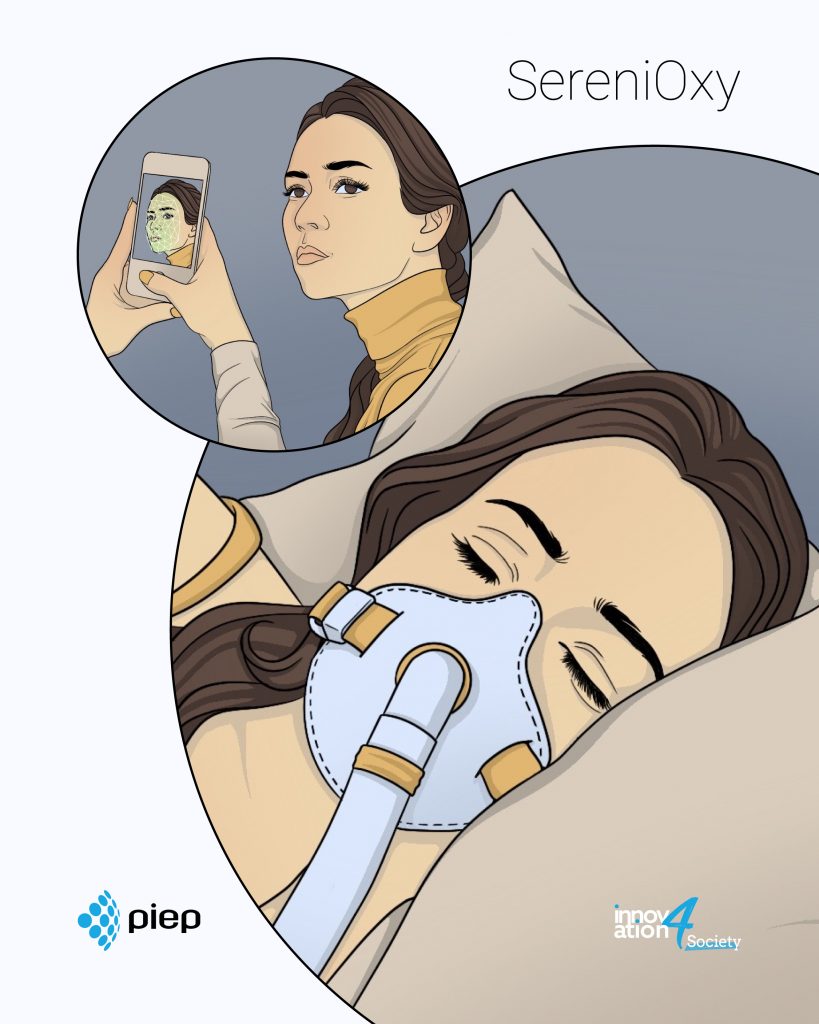
PIEP’s involvement is essential for the technical and scientific feasibility of the device, focusing on the selection and mechanical characterisation of medical-grade polymers, with the aim of achieving creep resistance and a service life for the cushion that is 30 per cent longer than current market options. Product development utilises advanced modelling and computational fluid dynamics (CFD) simulations, as well as finite element analysis (FEA), to optimise facial pressure distribution and internal airflow, ensuring maximum clinical performance and comfort. At the same time, the project incorporates sustainability principles through a life cycle assessment (LCA), enabling the identification of opportunities to reduce environmental impact and optimise raw material consumption throughout the production process.
In the field of medical devices used in day-to-day clinical practice, too, polymer engineering enables the development of solutions that simplify procedures and enhance patient safety. The EasyFlush Syringe project forms part of this context. Developed by a consortium led by Moliporex and comprising PIEP, the Coimbra Higher School of Nursing and the Lisbon Higher School of Nursing, the project’s main objective is to develop an innovative dual-chamber syringe that enables the administration of drugs, flushing and locking within a single device, thereby drastically simplifying the maintenance of venous catheters. This solution aims to improve patient safety by reducing the number of times the vascular access is manipulated by around 30% to 50%, thereby combating common complications such as catheter occlusion and bloodstream infections. Unlike current solutions, the SEF allows for in situ and independent loading of the chambers, giving healthcare professionals full control over volumes and the administration technique.
The technical feasibility of this device is based on advanced polymer engineering expertise, focusing on detailed 3D modelling and the selection of biocompatible, transparent, medical-grade materials. The development process utilises FEA and CFD computer simulations to predict mechanical behaviour and optimise fluid flow within the chambers. These tools are crucial for ensuring leak-tightness and complete physical separation between the solutions, thereby preventing cross-contamination. The project also involves optimising the high-precision injection moulding process and assessing the product’s environmental performance using the LCA methodology, ensuring that clinical innovation is accompanied by industrial efficiency and sustainability.
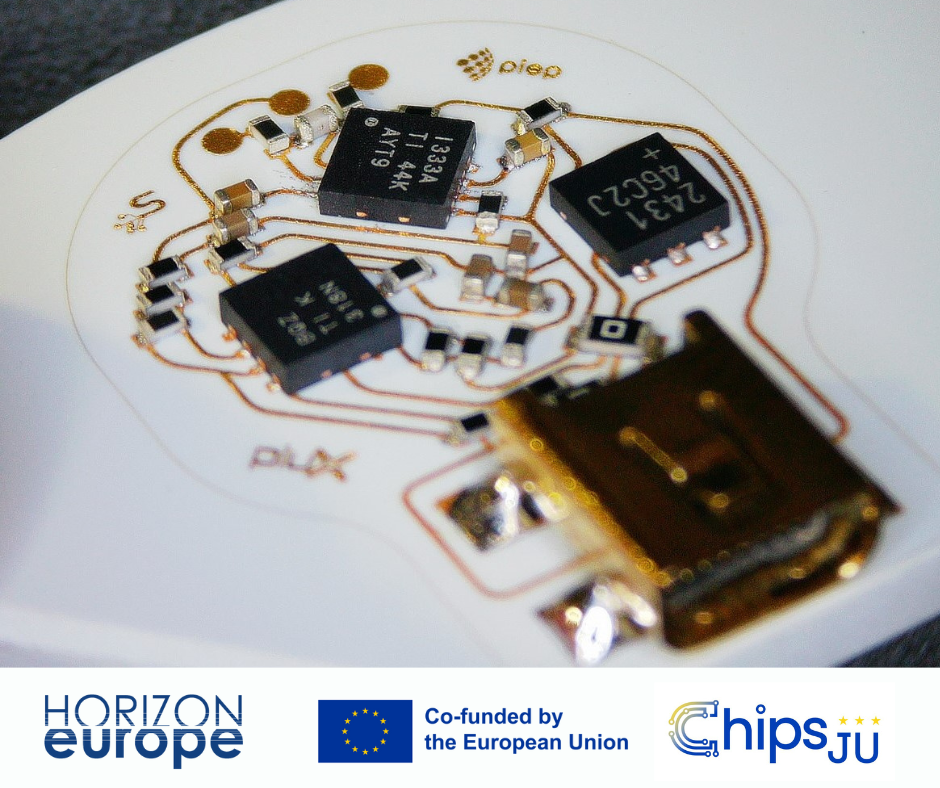
Complementing these device- and material-centred approaches, the European Sustronics project is exploring new strategies for integrating electronics into polymer components, paving the way for more compact and sustainable medical devices. The project, led by Philips (Netherlands), aims to improve the way electronic products are designed, manufactured, used and recovered, promoting more sustainable approaches throughout their entire life cycle. The project comprises ten pilot projects, eight of which are directly related to the healthcare sector. PIEP leads WP1 – Materials Development and participates in Pilot 2.1 – Embedded electronics for electroencephalography (EEG) monitoring, developed in collaboration with the Portuguese company PLUX Biosignals.
In this pilot project, PIEP is responsible for developing a new generation of sensors for EEG signal acquisition, based on replacing the traditional printed circuit board (PCB) with Laser Direct Structuring (LDS) technology. This technology allows electronic circuits to be integrated directly onto the surface of polymer parts, enabling more compact, lightweight and highly integrated solutions – characteristics that are particularly relevant in the development of portable and wearable medical devices. Initial LCA results indicate that the sensor prototype developed using LDS technology shows a reduction of around 40% in the product’s environmental footprint when compared with the current PCB-based solution. These results highlight the potential of integrating electronics into polymer substrates as a strategy for reducing the environmental impact of electronic devices whilst simultaneously promoting more efficient and sustainable medical solutions.
Taken together, these projects demonstrate the diversity of approaches through which polymeric materials contribute to innovation in the healthcare sector, ranging from the development of new sustainable materials and advanced textile solutions to the design of personalised medical devices and the integration of electronics into polymeric components. This integrated vision reinforces the role of polymer engineering as a key element in the evolution of future medical devices, balancing clinical performance, industrial efficiency and environmental sustainability.
Luciano Rietter1, Inês Gomes1, Magda Silva1, Beatriz Sampaio1, Bárbara Silva2
1 – PIEP
2 – COLTEC
Article originally published in InterPLAST Magazine.

