Case Study
AIM-PACE

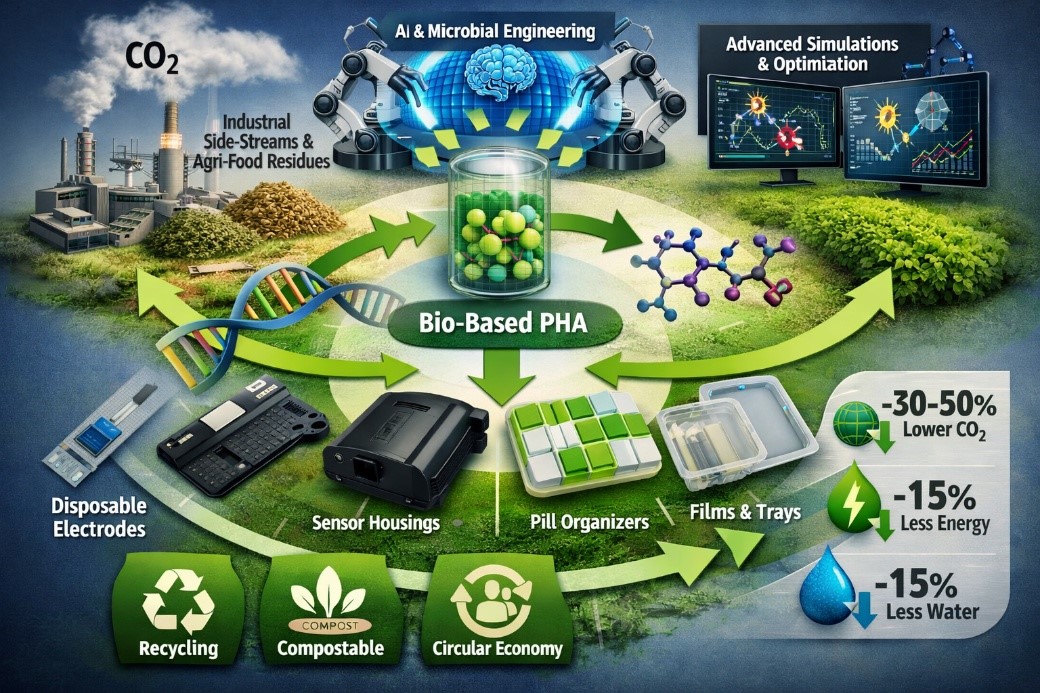
The AIM-PACE project aims to develop a new generation of polyhydroxyalkanoates (PHAs) with superior properties, including improved processability, toughness, and barrier and electrical properties, using a combination of advanced technologies. The project integrates microbial engineering, advanced computational simulations, and an artificial intelligence (AI) platform based on multi-objective optimization.
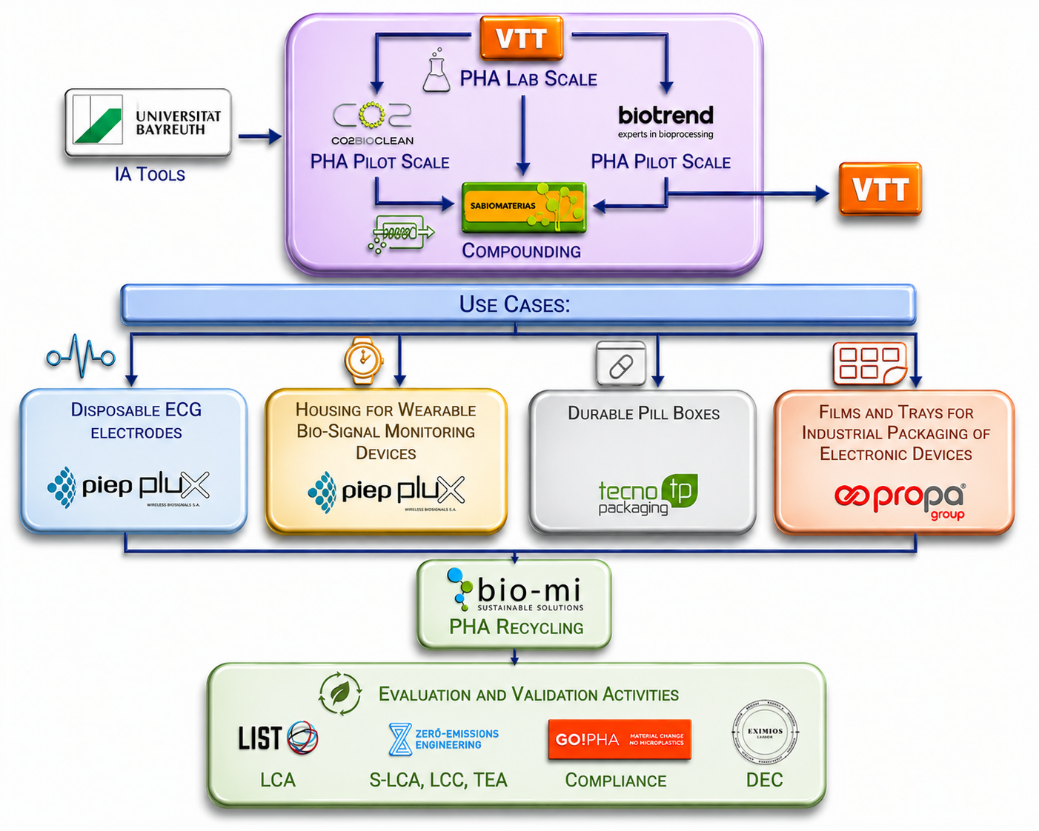
By valorizing agri-food waste, industrial by-products, and biogenic CO₂, AIM-PACE aims to establish seven new technologies and four integrated value chains in Europe, spanning from raw material production to end-use applications. The developed solutions will be validated up to TRL 7 through four demonstrators representing sectors with high impact potential, including (i) components for disposable ECG electrodes; (ii) casings for wearable biosignal monitoring devices; (iii) reusable medication organizers; and (iv) films and trays for industrial packaging of electronic devices.
Circularity is integrated into the design of the materials, prioritizing strategies for material reduction, reuse, and mechanical recycling. For applications where recycling is not feasible, the compostability of the materials will be evaluated and confirmed.
From an environmental perspective, the project aims to achieve significant reductions compared to fossil-based materials, including (i) 30–50% fewer greenhouse gas emissions over the life cycle; (ii) 15% lower primary energy consumption; and (iii) 15% lower water consumption per kilogram of material produced. Additionally, at least 80% of the raw materials used will come from agri-food waste and industrial byproducts, with 80% of the materials’ performance maintained after three recycling cycles. All processes will comply with DNSH (Do No Significant Harm) criteria.
By combining biotechnology, artificial intelligence, and circular economy principles, AIM-PACE will contribute to the development of more sustainable high-performance materials and to the transition of European industry toward more efficient and circular production models.