
The transition to sustainable materials represents one of the key challenges currently facing the plastics and electronics industries. Against this backdrop, the European AIM-PACE project proposes an innovative approach to making use of agricultural and industrial waste streams, converting them into high-performance bio-based thermoplastics. Among the most promising materials are polyhydroxyalkanoates (PHAs), a family of biopolymers produced by microorganisms, which have been gaining prominence as an alternative to fossil-based plastics. PHAs are currently the main bio-based and biodegradable thermoplastic produced in the European Union (EU)/European Economic Area (EEA) on a pre-industrial scale.
However, despite their potential, the PHAs currently available still have limitations in terms of mechanical properties, processability and cost – factors that hinder their large-scale adoption.
To overcome these limitations, AIM-PACE aims to develop a new generation of PHAs with superior properties, including processability, toughness, barrier properties and electrical properties, using a combination of advanced technologies. The project integrates microbial engineering, advanced computational simulations and an artificial intelligence (AI) platform based on multi-objective optimisation. In addition, Bayesian optimisation techniques will improve the efficiency of production processes, reducing energy and raw material consumption throughout the value chains. Microbial engineering will be used to optimise microorganisms capable of converting agri-food waste, industrial by-products and biogenic CO₂ into biopolymers, whilst computational simulations will enable the properties of the resulting materials to be predicted and adjusted.
In this way, AIM-PACE aims to establish seven new technologies and four integrated value chains in Europe, ranging from the valorisation of raw materials to end applications. The project also involves close collaboration with end users, recyclers, waste managers and policy-makers, ensuring regulatory alignment and facilitating future market adoption.
The solutions developed aim to enable innovative applications with a lower environmental impact. To ensure their viability, the project also provides for the industrial validation – with a technological readiness level (TRL) of up to 7 – of four demonstrators and the creation of new European value chains based on the principles of the circular economy. These applications span sectors with high potential for impact, including sustainable packaging, medical devices and wearable electronics.
Circularity is integrated right from the design stage of the materials. The project prioritises strategies for material reduction, reuse and mechanical recycling. For applications where recycling is not feasible, the compostability of the materials will be assessed and confirmed.
From an environmental perspective, the project aims to achieve significant reductions compared with fossil-based materials, including:
30–50% fewer greenhouse gas emissions over the life cycle;
15% lower primary energy consumption;
15% lower water consumption per kilogramme of material produced.
It is worth noting that at least 80 per cent of the raw materials used will come from agri-food waste and industrial by-products sourced in Europe. Furthermore, all processes will comply with the DNSH (Do No Significant Harm) criteria.
The development of high-performance bioplastics is essential for reducing dependence on fossil-based materials and promoting a circular economy. By integrating biotechnology, artificial intelligence and advanced sustainability strategies, AIM-PACE represents a significant step towards more efficient, recyclable and environmentally responsible materials. The expected results could contribute to new industrial solutions and accelerate the transition to more sustainable production systems.
The AIM-PACE project (101287490) — Artificial Intelligence-Designed Thermoplastic Materials for Sustainable Packaging and Electronics — was approved under Horizon Europe (HORIZON-JU-CBE-2025-IA-05), with an eligible budget of €8,473,161. The project has also been awarded the STEP SEAL, a seal associated with the Strategic Technologies for Europe Platform (STEP), which recognises the excellence and strategic relevance of the proposal.
To achieve these objectives, AIM-PACE brings together fourteen partners specialising in various fields, including AI, biotechnology, polymer processing, plastics manufacturing, the environment and regulation, and communication and commercial exploitation. Among the consortium members are the VTT Technical Research Centre of Finland, CO2BioClean GmbH, PROPAGROUP SPA, the University of Bayreuth and the Luxembourg Institute of Science and Technology, as well as the Portuguese companies Sabio S.r.l. and PLUX Biosignals, in addition to PIEP.
PIEP leads Work Package 4 (WP4), which encompasses material formulation, pilot-scale processing and the validation of printed and moulded component prototypes for wearable biosignal monitoring devices. PIEP’s work focuses on the development of disposable ECG electrodes, including the printing of circuits on the new PHA films, with particular attention to signal quality, electrical performance and the flexibility of the solution.
In parallel, housings for wearable devices will be produced in collaboration with PLUX Biosignals. The injection moulding process will be used with the new PHA material, for which mechanical strength, dimensional stability and durability are critical properties. To this end, the results of process simulations, combined with experimental tests, will be used to validate the mould and define the processing conditions during a pilot production phase.
In addition, PIEP will contribute to biodegradability testing, which includes aerobic degradation in water, composting, soil and the marine environment.
The AIM-PACE project thus represents a decisive step towards a greener, more innovative and European plastics industry, linking sustainability, technological innovation and the circular economy.
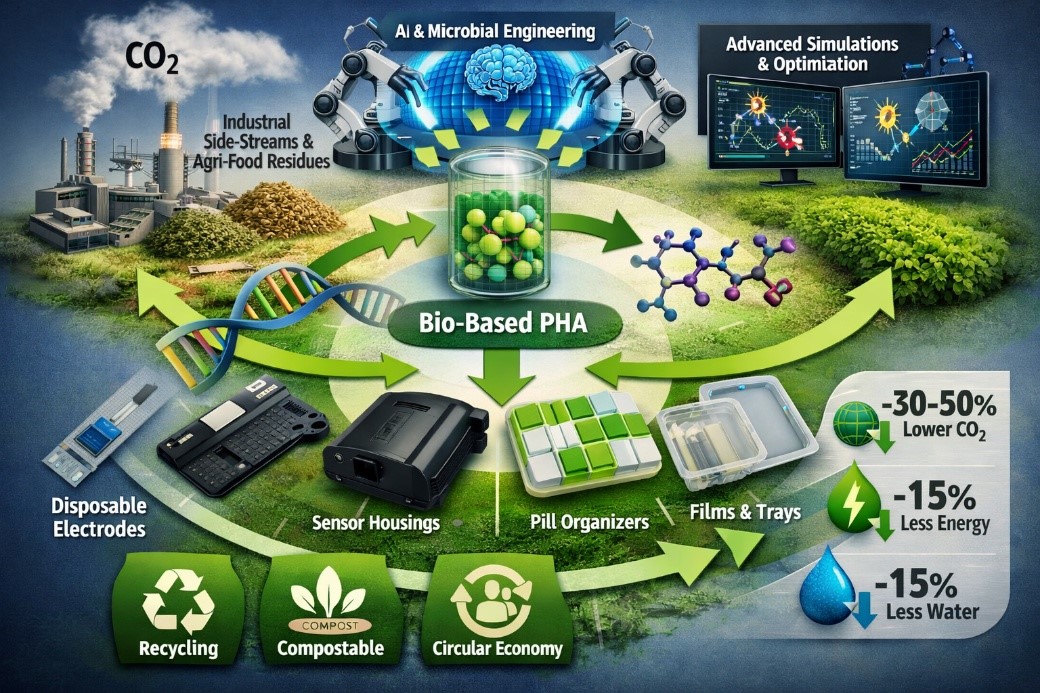
Fig.1 – Schematic diagram of the AIM PACE workflow (AI-generated image).


Cátia Araújo, Advanced Manufacturing Processes – Polymers – Project Manager
Sílvia Cruz, Advanced Manufacturing Processes – Polymers – Coordinator
Article originally published in Molde Magazine.

