How can a traditional coin be transformed into an item that combines heritage, design and technology?
Forming part of the National Press and Mint (INCM)’s 2026 Numismatic Plan, the “Lighthouses of Portugal” collection demonstrates how technological innovation and polymer engineering can add new functionalities to an object as iconic as a coin.
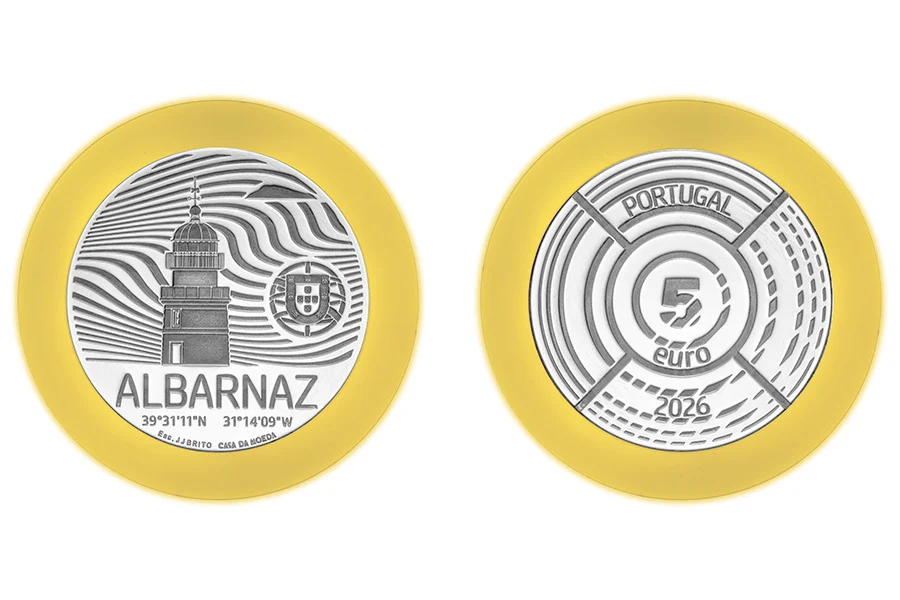
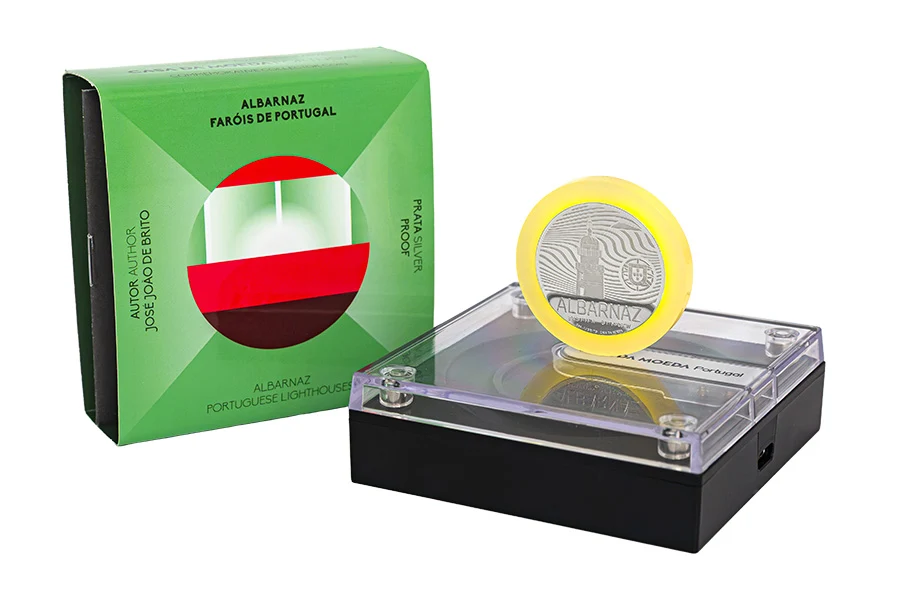
In this project, PIEP was responsible for producing the translucent ring integrated into the coin, which allows light to pass through, as well as the polymer components of the case, designed to house, carry and protect the coin whilst keeping it visible.
Promoted by INCM, in collaboration with PIEP and Fraunhofer Portugal AICOS, the project represents the convergence of art, engineering and technology.
Following the launch of the first coin, dedicated to the Cape St Vincent Lighthouse, in April, the collection now continues in November with a second issue dedicated to the Ponta do Albarnaz Lighthouse in the Azores, designed by the sculptor José João de Brito.
The first coin, by José João de Brito, inaugurated the ‘Lighthouses of Portugal’ series, paying tribute to the Cape St Vincent Lighthouse, which has been in operation since 1846. The design captures the grandeur of the structure and the importance of navigation, highlighting its iconic Fresnel lens and its role in maritime safety.
The second coin, by the same artist, features the Ponta do Albarnaz Lighthouse on the island of Flores – the westernmost in Europe and the first in the Azores – which has been in operation since 1925. The commemorative coin evokes the majesty of the lighthouse and its Fresnel lens, celebrating its centenary and the historic role of lighthouses as essential guides for Atlantic navigation.
This project demonstrates the potential of polymeric materials and their processing technologies in the development of innovative, distinctive products with high added value.
At PIEP, we transform knowledge and technology into solutions that make a difference.