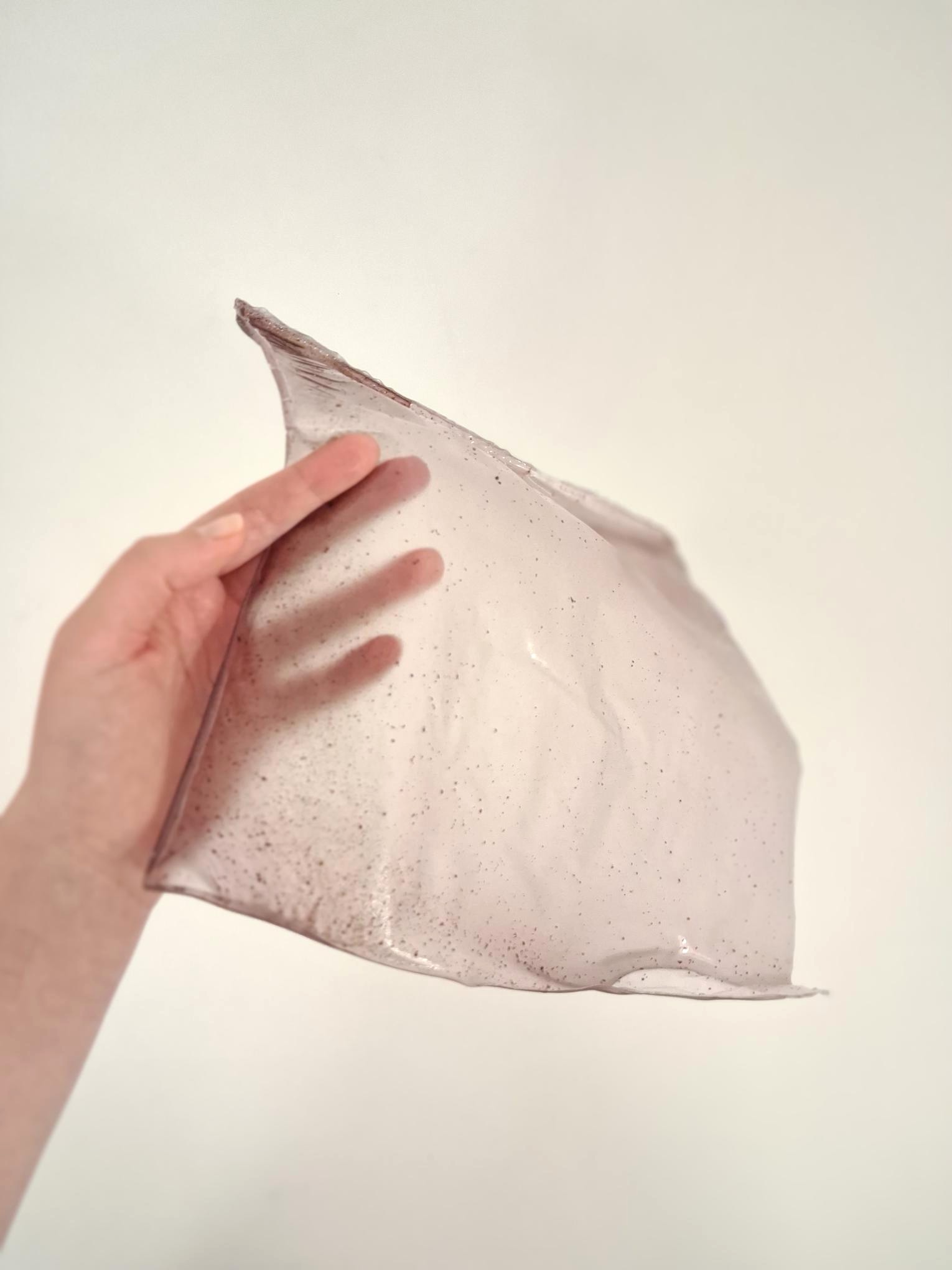
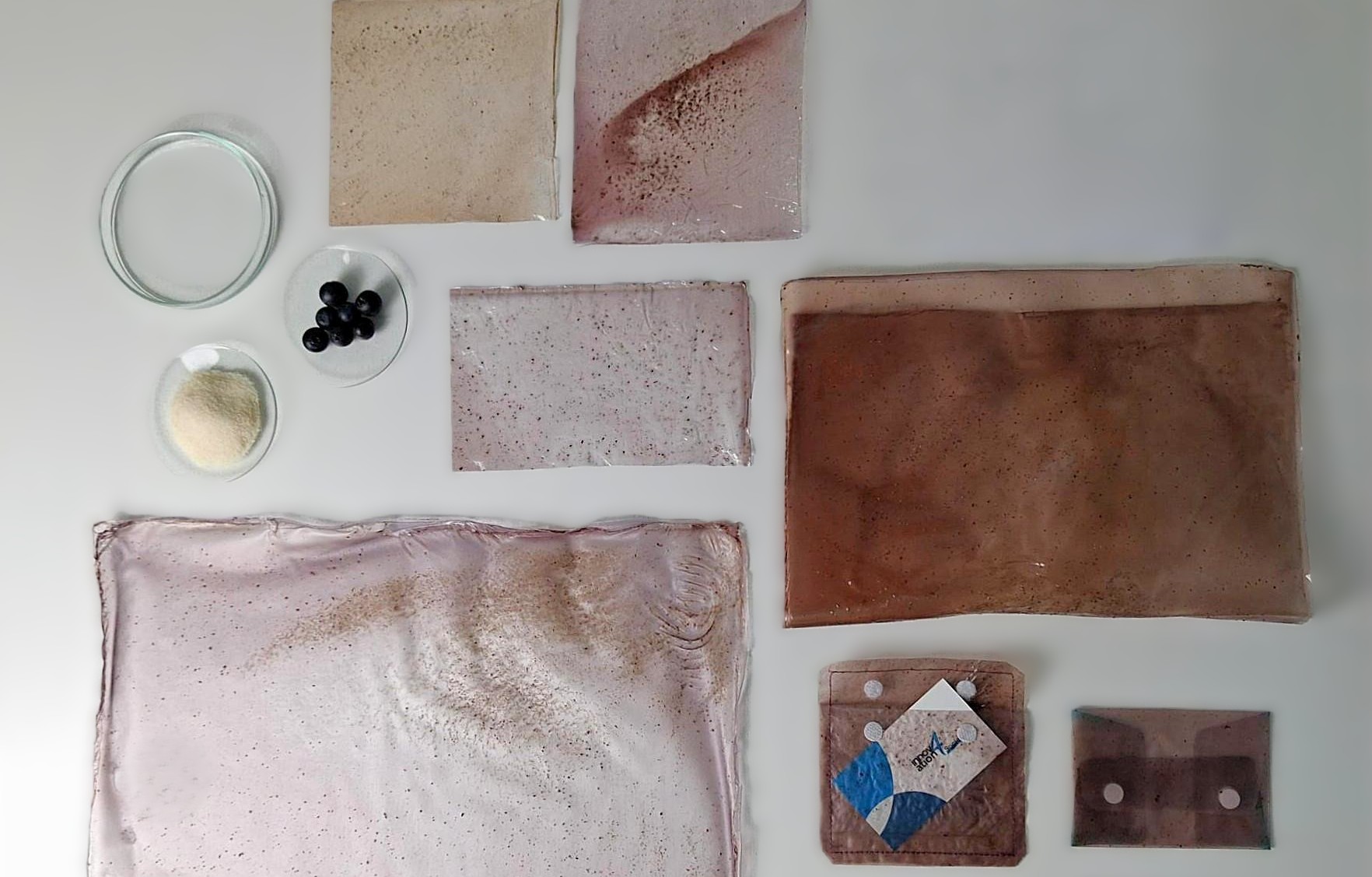
The FRESH4Food project aims to develop an active biosensor system for real-time monitoring of pH during food spoilage. Overcoming the limitations of rigid components, it focuses on flexible, ephemeral biofilms produced by solution casting, integrating phenolic compounds and anthocyanins (blueberry) into a biopolymer matrix.
Specific Objectives:
- Biosensor Monitoring: A colorimetric interface that translates invisible changes in pH into an immediate visual signal.
- Multidimensional Functionality: Combines visual diagnosis with antioxidant and antimicrobial properties, extending the shelf life of food.
- Sustainability and the Circular Economy: Reduction of waste and food safety through Design for Dissolution, ensuring safe return to the biosphere.
- Scalability: Production of cohesive films via solution casting with mechanical integrity and industrial viability.
- Exploration via Material-Driven Design (MDD): Mapping of sensory, interpretative, affective and performative attributes (Ma2E4 toolkit), valuing the ‘aesthetics of imperfection’ for everyday applications.
This work was funded by Portugal’s Recovery and Resilience Plan (PRR), under the Interface Mission, with the support of the European Union — NextGenerationEU — through the POLARISE project — Contract No.: RRP — Investment RE-C05-i02: Interface Mission — CT (Project No. 27)