The food industry today faces a pressing and complex challenge: creating packaging that ensures the protection, quality, and safety of food, while significantly reducing its environmental impact. In this context, PIEP – Centre for Innovation in Polymer Engineering, a technological interface of the University of Minho and a national reference center in technology and innovation – stands out as a leader in Portugal in the development of innovative and sustainable solutions for the plastics industry.
With a strong commitment to the circular economy, PIEP promotes the creation of food packaging that is not only smart and functional but also designed to facilitate the reuse, recycling, and recovery of materials throughout its life cycle. This integrated approach contributes to reducing waste, conserving natural resources, and mitigating the environmental impacts associated with conventional packaging.
In this context, we would like to highlight PIEP’s contributions to the development of the Better Plastics and EcoBiB projects, which perfectly illustrate how polymer engineering is transforming the food packaging sector, promoting more efficient, durable products aligned with the principles of the circular economy and environmental sustainability.
Better Plastics: circularity and sustainability in the use of plastics
The Better Plastics – Plastics in a Circular Economy project had as its central objective the promotion of circularity in the use of plastics, aligning research, development, and innovation to produce more sustainable, recyclable materials and products with a lower environmental impact.
One of the fundamental aspects of Better Plastics was the development of materials that, from their formulation, incorporate circularity requirements. In the PIEP project, we were involved in the development of high-performance multilayer films for application in food packaging, highlighting:
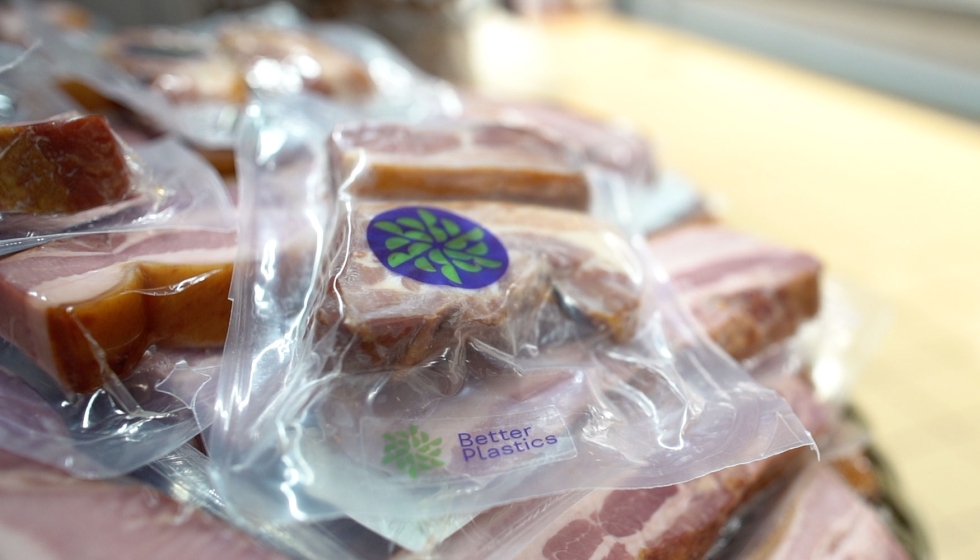
- Polyethylene (PE)-based films incorporating recycled material, simultaneously ensuring essential properties such as oxygen and moisture barrier, food safety, and compatibility with recycling systems, for application in cheese and meat packaging;
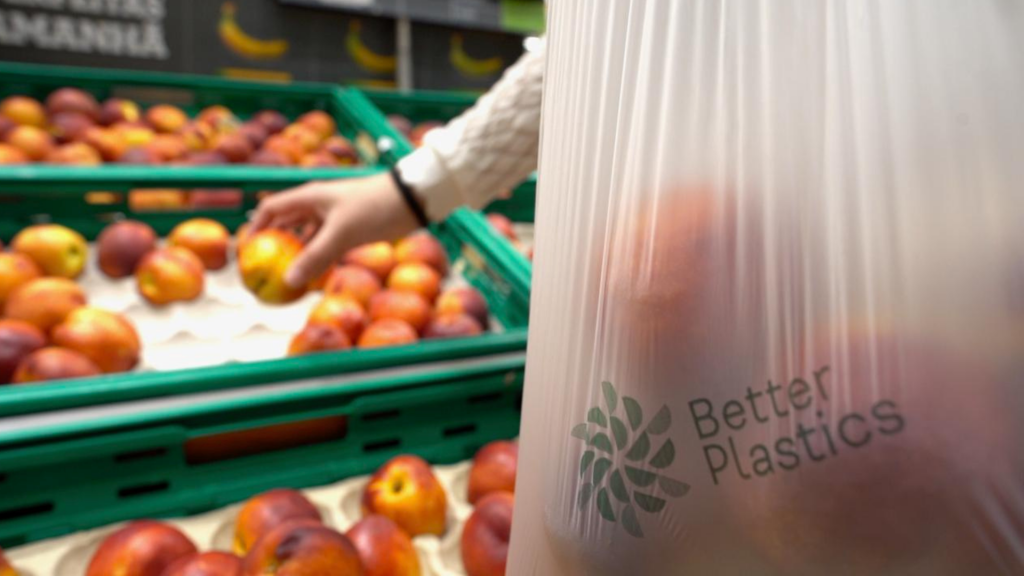
- Functionalized biodegradable films that accelerate natural degradation in the environment, particularly suitable for disposable packaging of fresh products such as fruits and vegetables;
- Biodegradable bags for household organic waste, compostable under industrial conditions and certified for their environmental performance.
Beyond the material, the design of the packaged product is essential to ensure resource efficiency and facilitate recycling at the end of its life cycle. As part of Better Plastics, PIEP was involved in the development of:
- Food packaging with significantly reduced weight and volume of plastic, incorporating recycled materials and structuring layers that allow for effective separation and recycling;
- Recycled PET (R-PET) bottles with attached caps, facilitating the recycling process;
- Cups and packaging made from recycled polypropylene (R-PP), integrating solutions that ensure a balance between functionality, sustainability, and cost.
The project also dedicated efforts to optimizing recycling processes and incorporating alternative raw materials, including biopolymers and functional additives that improve the biodegradability and recyclability of materials. This multidisciplinary work, developed in partnership with industry and academia, aimed to ensure that materials and final products not only meet technical and legal requirements but also integrate into an effective circular economy, contributing to the reduction of plastic waste and carbon emissions.
EcoBiB: innovation in bag-in-box packaging for wines
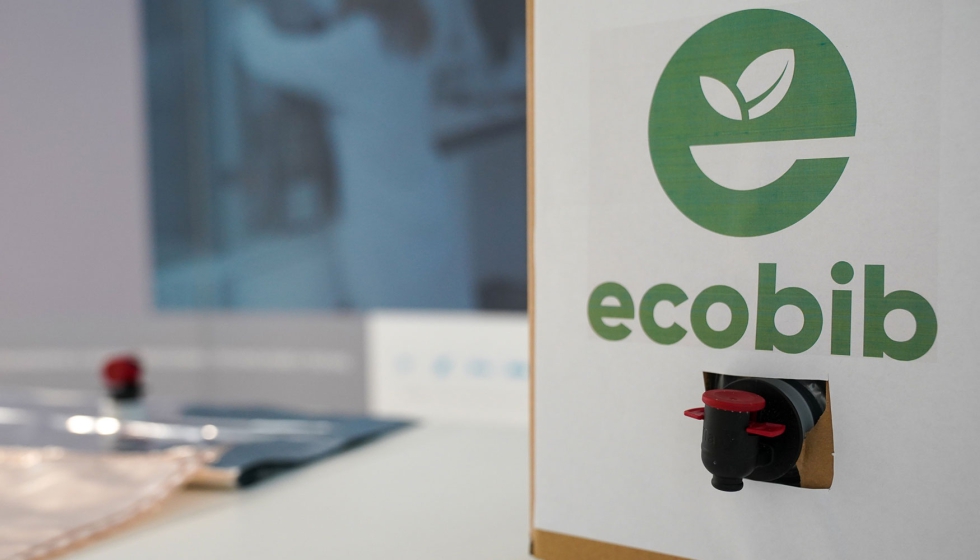
Another flagship project led by PIEP was EcoBiB – Eco-Innovative Bag-In-Box Solutions, developed in partnership with Vizelpas, focused on innovating in terms of Bag-in-Box (BiB) packaging, widely used in the wine sector.
EcoBiB incorporates functional agents into its multilayer films that play an active role in preserving the packaged contents. These agents include antioxidants, oxygen absorbers, and other compounds that extend the shelf life of liquids by delaying oxidation and degradation caused by exposure to oxygen and light.
This functionalization of the films represents a significant improvement over traditional passive solutions, ensuring the maintenance of product quality and reducing food waste.
One of the biggest challenges in developing active multilayer films is ensuring that, despite the complexity of the material, the packaging is recyclable at the end of its life cycle. EcoBiB has enabled the development of solutions that combine active functionality with recyclability, ensuring that the films can be integrated into recycling chains without compromising the quality of the recycled material.
This approach reduces the environmental impact of Bag-in-Box packaging, recognized for its convenience, logistical efficiency, and lower use of plastic compared to rigid packaging. This collaborative work ensures that the solutions developed are viable, competitive, and adapted to the real needs of the market, supporting the food industry in its transition to smarter and more sustainable packaging.
PIEP, a strategic partner in the transition to a circular economy
The Better Plastics and EcoBiB projects exemplify PIEP’s commitment to responsible and sustainable innovation in the food industry polymer sector.
By combining advanced materials research, intelligent design, functionalization, and circular economy, PIEP positions itself at the forefront of developing packaging that responds to environmental, regulatory, and market challenges, contributing to the reduction of environmental impact and the improvement of food product quality.
These types of developments reinforce PIEP’s role as a strategic partner for companies and entities that intend to innovate, produce sustainably, and prepare for a future where the circular economy and environmental responsibility are imperative.

Bruno Pereira da Silva, Director of Public Affairs and Sustainability at PIEP.
Article originally released at InterPLAST Magazine

